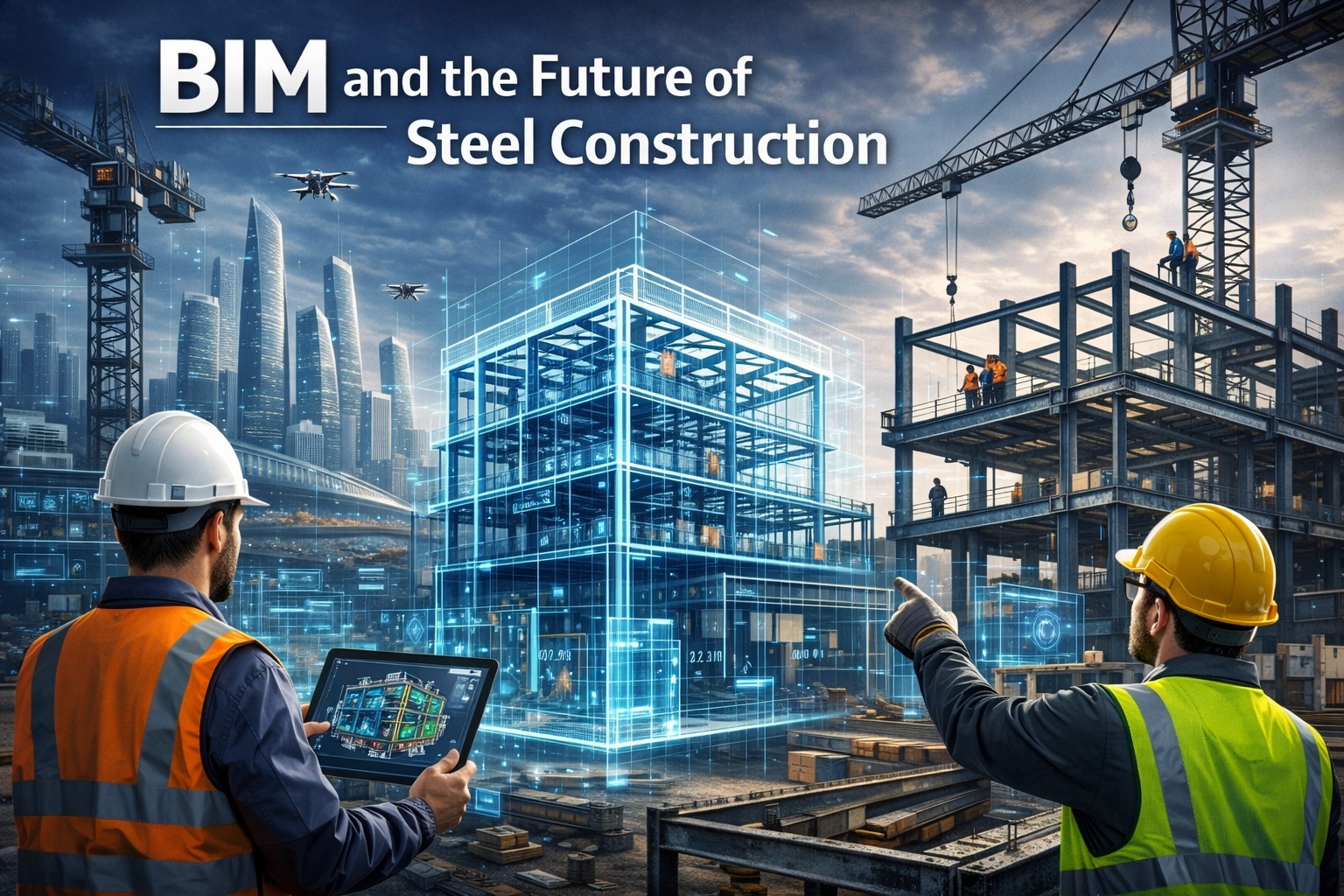
BIM and the Future of Steel Construction
Explore how Building Information Modeling (BIM) is transforming steel construction. Learn how BIM improves accuracy, coordination, and efficiency in modern steel detailing projects.
🔑 Introduction
The construction industry is rapidly evolving, and digital transformation is at the center of this change. One of the most impactful innovations is Building Information Modeling (BIM).
In steel construction, BIM is not just a tool—it’s a smarter way to design, detail, fabricate, and build. By integrating data, visualization, and collaboration into a single workflow, BIM is shaping the future of steel detailing and construction.
📐 What is BIM in Steel Construction?
Building Information Modeling (BIM) is a digital process that creates and manages detailed 3D models of a structure, including all its components and data.
In steel construction, BIM allows:
- Creation of intelligent 3D steel models
- Integration of structural, architectural, and MEP systems
- Real-time collaboration among stakeholders
🚀 Why BIM is the Future of Steel Construction
1. 🧩 Improved Coordination and Collaboration
BIM enables all project stakeholders—engineers, detailers, fabricators, and contractors—to work on a shared model.
Benefits:
- Reduced miscommunication
- Better project alignment
- Faster decision-making
2. 🔍 Clash Detection Before Construction
One of BIM’s most powerful features is clash detection.
What it does:
- Identifies conflicts between structural steel and other systems
- Resolves issues before fabrication or erection
Impact:
- Prevents costly site errors
- Saves time and resources
3. 📏 Enhanced Accuracy in Steel Detailing
BIM-based detailing ensures high precision in drawings and models.
Advantages:
- Accurate dimensions and connections
- Reduced manual errors
- Better fabrication-ready drawings
4. ⏱️ Faster Project Delivery
With BIM, workflows become more streamlined and efficient.
Results:
- Reduced rework
- Faster approvals
- Improved scheduling
5. 🏭 Better Fabrication Integration
BIM models can be directly linked to fabrication processes.
Key benefits:
- Automated shop drawings
- Improved material planning
- Seamless data transfer to CNC machines
6. 📊 Data-Driven Decision Making
BIM is not just about visuals—it’s about data.
Capabilities:
- Quantity takeoffs
- Cost estimation
- Project analysis
7. 🌱 Sustainable Construction
BIM contributes to more sustainable building practices.
How:
- Optimized material usage
- Reduced waste
- Efficient resource planning
🔮 Emerging Trends in BIM for Steel Construction
📌 1. Integration with AI and Automation
Artificial intelligence is being used to optimize designs and automate repetitive tasks.
📌 2. Cloud-Based Collaboration
Teams can now work on models in real time from different locations.
📌 3. Digital Twins
Creating real-time digital replicas of structures for monitoring and maintenance.
📌 4. AR/VR in Construction
Enhanced visualization for better planning and execution.
🛠️ Challenges in BIM Adoption
While BIM offers many advantages, adoption comes with challenges:
- High initial investment
- Need for skilled professionals
- Software interoperability issues
✔ Overcoming These Challenges:
- Invest in training and upskilling
- Choose compatible software tools
- Start with phased implementation
🏢 The Role of Steel Detailers in a BIM-Driven Future
Steel detailers are no longer just drawing creators—they are key contributors to digital construction workflows.
Their evolving role includes:
- Creating intelligent 3D models
- Coordinating across disciplines
- Ensuring fabrication-ready outputs
🚀 Conclusion
BIM is transforming the way steel structures are designed, detailed, and constructed. It enhances accuracy, improves collaboration, and drives efficiency across the entire project lifecycle.
As the industry moves toward digital construction, adopting BIM is no longer optional—it’s essential for staying competitive.
At ZenCad Steel, we leverage modern BIM workflows to deliver precise, coordinated, and future-ready steel detailing solutions.