Improving Fabrication with Better Drawings in Steel Detailing
Learn how high-quality steel detailing drawings improve fabrication accuracy, reduce errors, and streamline construction workflows for better project outcomes.
🔑 Introduction
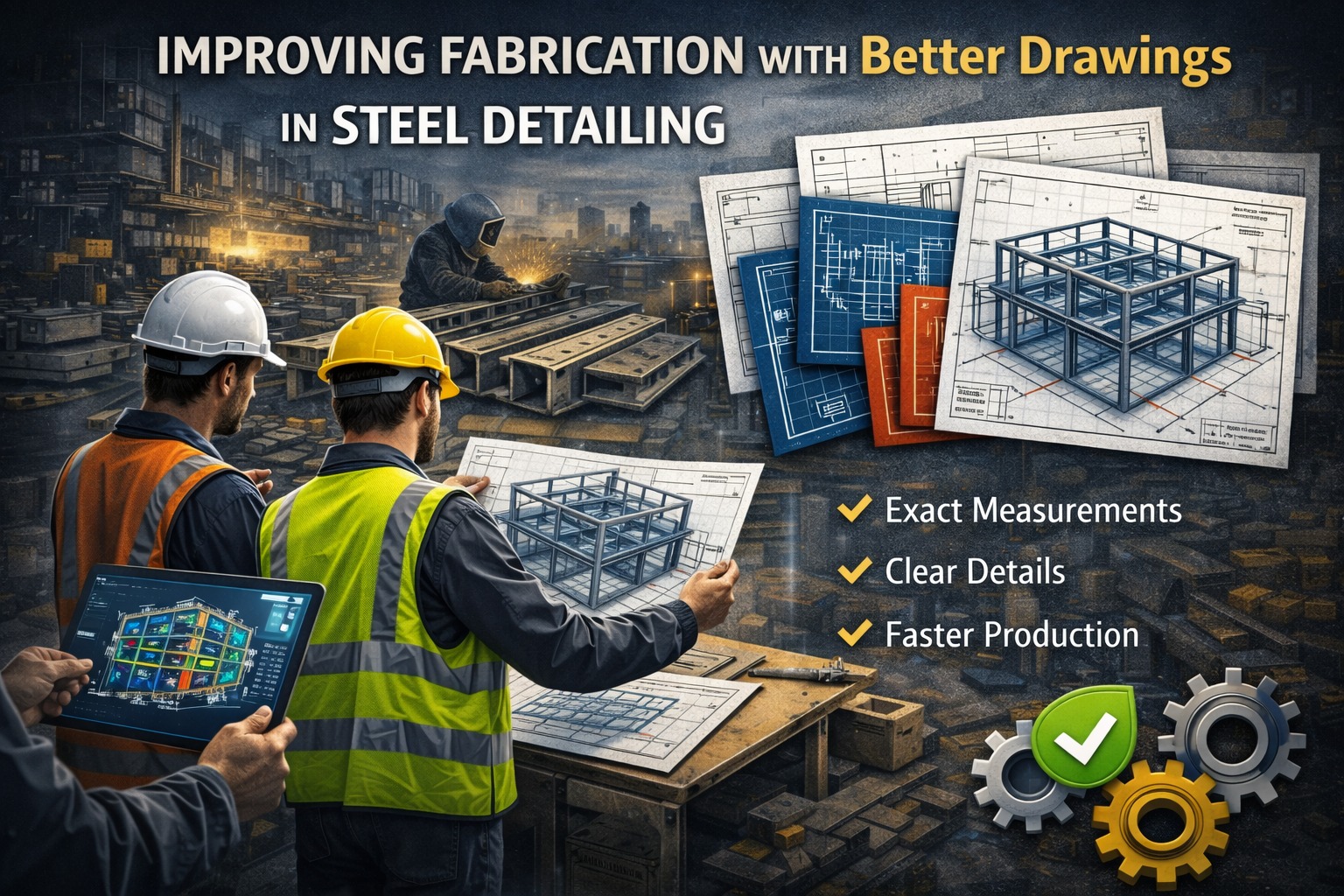
In steel construction, fabrication quality is only as good as the drawings provided. Steel detailing drawings serve as the blueprint for fabricators, guiding every cut, weld, and assembly step.
Poor-quality drawings can lead to costly mistakes, delays, and rework. On the other hand, well-prepared, accurate drawings significantly improve fabrication efficiency and project success.
In this article, we explore how better drawings in steel detailing can transform fabrication outcomes.
📐 What Are Steel Detailing Drawings?
Steel detailing drawings include:
- Shop drawings
- Assembly drawings
- Connection details
- Bill of materials (BOM)
These drawings provide fabricators with precise instructions required to manufacture structural steel components.
🚧 Common Problems with Poor Drawings
Before understanding improvements, it's important to recognize the issues caused by inadequate drawings:
❌ Lack of clarity
Unclear dimensions or missing notes create confusion during fabrication.
❌ Inaccurate measurements
Even small errors can lead to misalignment during assembly.
❌ Missing connection details
Fabricators may struggle to interpret how components fit together.
❌ Poor coordination
Conflicts between drawings and design documents result in delays.
✅ How Better Drawings Improve Fabrication
1. 📏 Enhanced Accuracy
Precise dimensions and clearly defined tolerances ensure components are fabricated correctly the first time.
Result:
- Reduced material waste
- Fewer fabrication errors
- Improved fit-up on site
2. ⚙️ Clear Connection Details
Detailed connection drawings eliminate guesswork for fabricators.
Benefits:
- Faster production
- Improved structural integrity
- Reduced dependency on site fixes
3. 🧩 Improved Coordination
Well-coordinated drawings align with architectural and structural designs.
Impact:
- Fewer clashes during erection
- Smooth workflow between teams
- Better project synchronization
4. ⏱️ Faster Fabrication Process
Clear and organized drawings reduce time spent interpreting instructions.
Outcome:
- Increased productivity
- Shorter fabrication timelines
- Better resource utilization
5. 🔄 Reduced Rework and Errors
Accurate drawings minimize mistakes that require re-fabrication.
Advantages:
- Lower project costs
- Improved efficiency
- Less downtime
6. 🏭 Fabrication-Friendly Design
Good detailing considers real-world fabrication constraints.
Examples:
- Standardized components
- Optimized cutting and welding processes
- Easy handling and transportation
7. 📊 Better Material Management
Detailed Bills of Materials (BOM) help fabricators plan efficiently.
Benefits:
- Accurate material procurement
- Reduced wastage
- Cost control
🛠️ Best Practices for High-Quality Steel Drawings
To achieve better fabrication outcomes, follow these proven practices:
- Use Advanced Detailing Software
- Maintain Consistent Standards
- Implement Quality Checks
- Collaborate with Fabricators
- Keep Drawings Simple and Clear
🚀 The Role of Technology in Improving Drawings
Modern technologies like BIM (Building Information Modeling) and 3D modeling have revolutionized steel detailing.
Key advantages:
- Clash detection before fabrication
- Real-time collaboration
- Improved visualization
- Higher accuracy
🏢 Conclusion
Better drawings are the foundation of successful steel fabrication. They not only improve accuracy and efficiency but also reduce costs and project risks.
By investing in high-quality steel detailing practices, businesses can ensure smoother fabrication processes and superior construction outcomes.
At Zencad Steel, we focus on delivering precise, fabrication-ready drawings that help bring your projects to life with confidence and efficiency.